import random, numpy as np, torch, torch.nn as nn, torch.nn.functional as F
import matplotlib.pyplot as plt
from dataclasses import dataclass
from typing import Tuple, Dict, List
from torch.utils.data import Dataset, DataLoader
try:
from tqdm.auto import tqdm
except Exception:
def tqdm(x, **kwargs): return x
SEED = 7
random.seed(SEED); np.random.seed(SEED); torch.manual_seed(SEED)
if device.type == "cuda":
torch.backends.cudnn.benchmark = True
@dataclass
class WorldConfig:
…

For years, the computer vision community has operated on two separate tracks: generative models (which produce images) and discriminative models (which understand them). The assumption was straightforward — models good at making pictures aren’t necessarily good at reading them. A new paper from Google, titled “Image Generators are Generalist Vision Learners” (arXiv:2604.20329), published April 22,…
The open-source AI landscape has a new entry worth paying attention to. The Qwen team at Alibaba has released Qwen3.6-35B-A3B, the first open-weight model from the Qwen3.6 generation, and it is making a compelling argument that parameter efficiency matters far more than raw model size. With 35 billion total parameters but only 3 billion activated…
class MolmoActVisualizer:
"""Visualization utilities for MolmoAct outputs"""
def __init__(self, figsize: Tuple[int, int] = (12, 8)):
self.figsize = figsize
self.colors = plt.cm.viridis(np.linspace(0, 1, 10))
def plot_trace(
self,
…
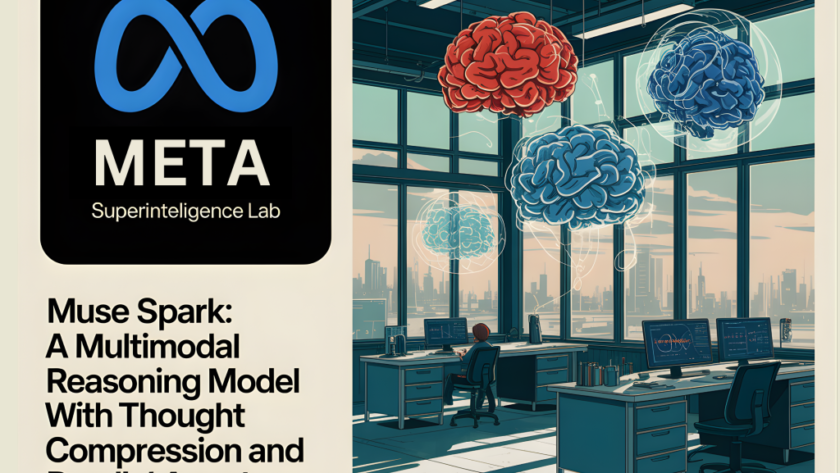
Meta Superintelligence Labs recently made a significant move by unveiling ‘Muse Spark’ — the first model in the Muse family. Muse Spark is a natively multimodal reasoning model with support for tool-use, visual chain of thought, and multi-agent orchestration.
https://ai.meta.com/static-resource/muse-spark-eval-methodology
What ‘Natively Multimodal’ Actually Means
When Meta describes Muse Spark as ‘natively multimodal,’ it means…
Video editing has always had a dirty secret: removing an object from footage is easy; making the scene look like it was never there is brutally hard. Take out a person holding a guitar, and you’re left with a floating instrument that defies gravity. Hollywood VFX teams spend weeks fixing exactly this kind of problem.…
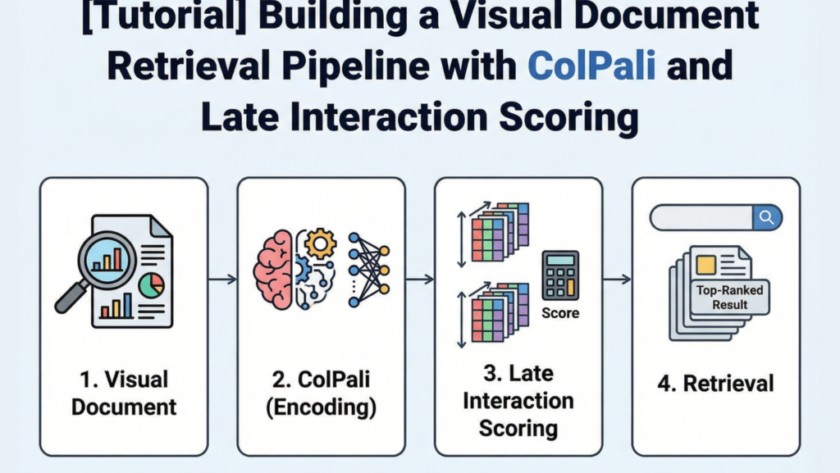
In this tutorial, we explore how we use Daft as a high-performance, Python-native data engine to build an end-to-end analytical pipeline. We start by loading a real-world MNIST dataset, then progressively transform it using UDFs, feature engineering, aggregations, joins, and lazy execution. Also, we demonstrate how to seamlessly combine structured data processing, numerical computation, and…
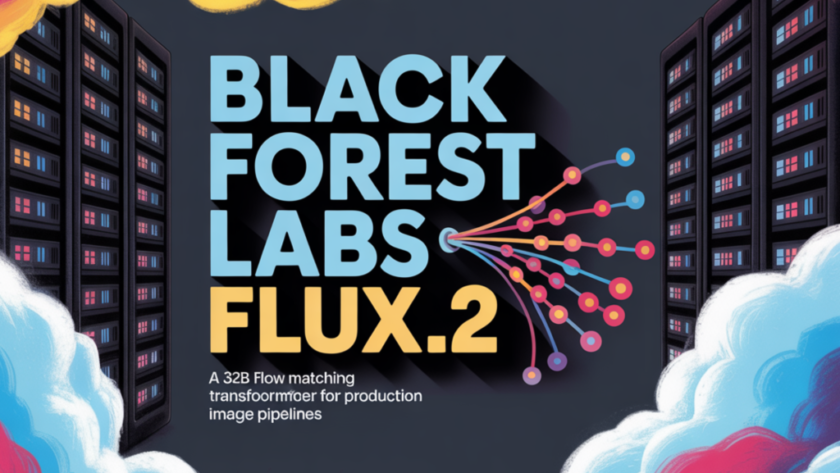
Black Forest Labs has released FLUX.2, its second generation image generation and editing system. FLUX.2 targets real world creative workflows such as marketing assets, product photography, design layouts, and complex infographics, with editing support up to 4 megapixels and strong control over layout, logos, and typography.
FLUX.2 product family and FLUX.2 [dev]
The FLUX.2…
Frontier multimodal models usually process an image in a single pass. If they miss a serial number on a chip or a small symbol on a building plan, they often guess. Google’s new Agentic Vision capability in Gemini 3 Flash changes this by turning image understanding into an active, tool using loop grounded in visual…
import subprocess, sys, os, json, hashlib
def pip(cmd):
subprocess.check_call([sys.executable, "-m", "pip"] + cmd)
pip(["uninstall", "-y", "pillow", "PIL", "torchaudio", "colpali-engine"])
pip(["install", "-q", "--upgrade", "pip"])
pip(["install", "-q", "pillow<12", "torchaudio==2.8.0"])
pip(["install", "-q", "colpali-engine", "pypdfium2", "matplotlib", "tqdm", "requests"])
Source link